In this dispatch
For businesses that deliver, every underutilised vehicle and every inefficient route is money you can’t afford to leave on the table. With the global fuel crisis rapidly increasing costs and causing volatile supply chain issues, we’ve brought forward the release of three features designed to give operations managers and dispatchers even better visibility over fleet capacity and driver schedules.
In this dispatch you’ll find all-new:
- Reporting on fleet capacity utilization
- Capacity indicator on your jobs table
- Timeline view for dispatchers
Fleet capacity insights
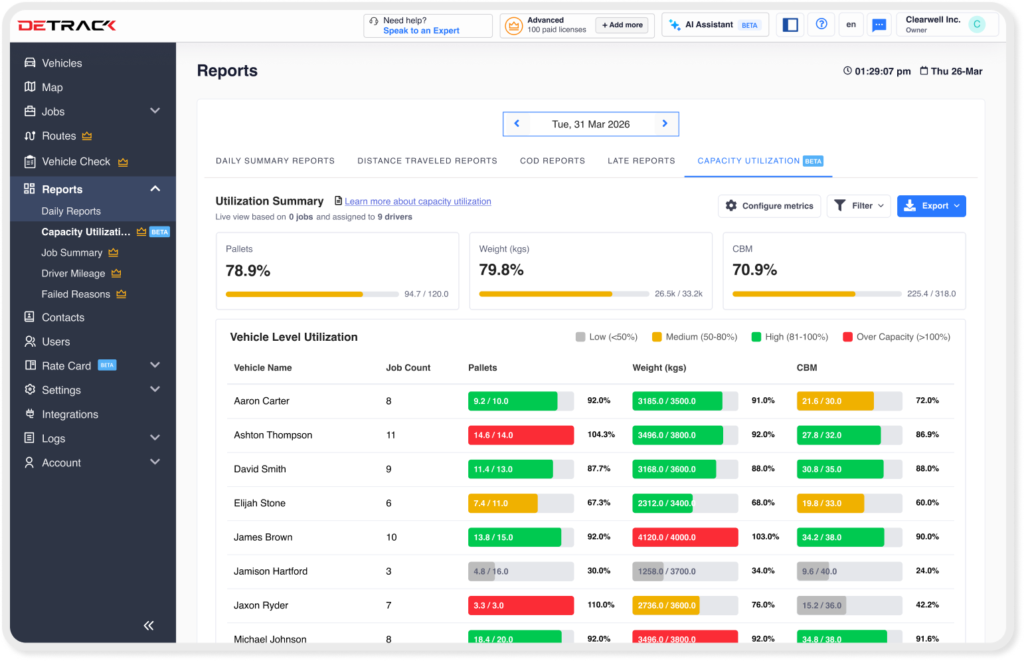
The goal for this report is straightforward – make sure every vehicle on the road is earning its keep. This report provides a clear picture of your fleet’s capacity across weight, cubic metres, and pallets.
You can view a live daily snapshot, or identify patterns over time using up to 30 days of historical data. Each vehicle is colour-coded so you can identify imbalances at a glance. If something doesn’t look right, you can drill down to the driver level to see exact load versus maximum capacity.
Before now, operations managers haven’t had an easy way to see which vehicles are overloaded and which are underused. Without that visibility, dispatchers were left making their best guess. Now, teams can rest easy knowing that their fleet isn’t burning unnecessary fuel or making any unnecessary trips.
Capacity indicator on the jobs table
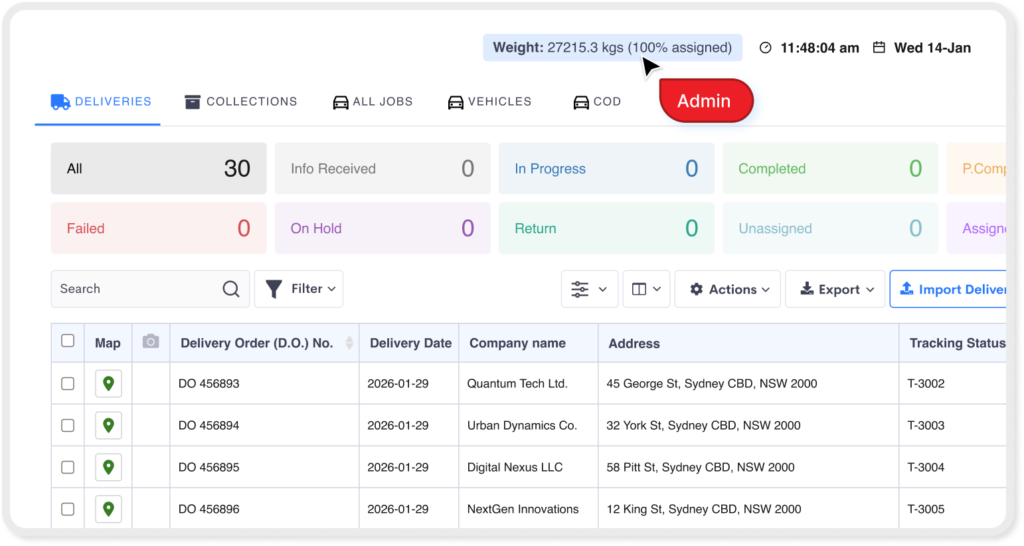
This feature works alongside the report above and is designed for speed. Before a single vehicle leaves the yard, dispatchers need to know the total load across all jobs for the day and how much has already been assigned.
You can now see that directly on the jobs table, with the total load (weight, cubic metres, or pallets) and the percentage already allocated to a driver or vehicle displayed at a glance. It’s a quick way to catch gaps in assignment before the day begins, consolidate loads where possible, and avoid sending out vehicles that aren’t full enough to justify rising operating costs.
Follow these steps to enable this feature.
Timeline view
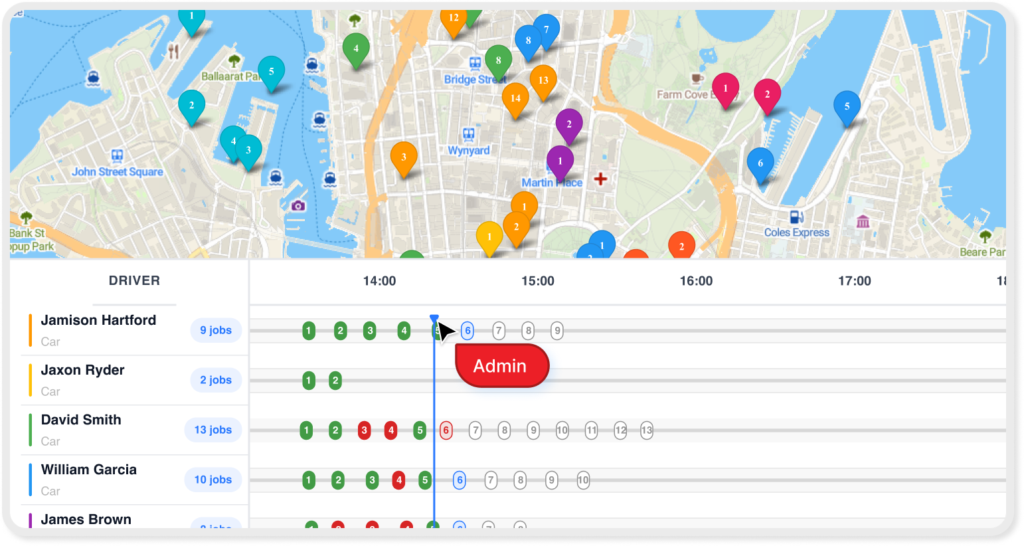
When fuel costs are climbing, delays don’t just waste time. They waste fuel. Dispatchers managing multiple drivers throughout the day have typically switched between the job list and the map to locate drivers and confirm whether they’re running on schedule.
Our new timeline view provides a visual overview of every driver’s schedule based on their ETA and service time, side by side, for a single day. Each job appears as a colour-coded block so you can instantly see which are on time, at risk, or late. You can gauge how tightly packed each driver’s day is and take action on delays without jumping between views.
When you can see the full picture in one place, you can keep ahead of the action – respond faster, keep routes running efficiently, and reduce the idle time and backtracking that unnecessarily consumes fuel.
Check out this guide to get started.
Coming soon – milestones report
We’re hearing from customers that they want an easier way to monitor key milestones throughout a driver’s day, particularly the difference between expected time on site versus actual, so they can identify inefficiencies and charge for overages.
Our new milestones report will give you a clear picture of how time is spent at every stage of a delivery job. By logging key milestones in the Driver App (heading to location, arrived at location, and job completion with POD), you’ll be able to accurately measure travel time between stops and time spent at each site.
The insights will be presented as an analytics report, making it easy to compare actual delivery performance against estimated service times, spot inefficiencies, and make data-driven improvements across your fleet.
How can we help you optimise your fleet’s fuel consumption?
Whether you’re an existing Detrack customer who needs a hand understanding your platform’s full capabilities, or are new to delivery management software, we can help. Book a call with one of our experts and we’ll step you through how Detrack can address your challenges and help you navigate your organisation through the global fuel crisis, and beyond.